According to the first question, 273 participants took part in the survey: Croatia (35), Greece (34), Latvia (36), Lithuania (32), Portugal (32), Romania (69), and Türkiye (35).
Figure 1. Distribution of survey participants by country.
Survey-based insights collected across partner countries to evaluate the effectiveness, relevance and impact of the Sustainability Problem-Solving Toolkit within school and non-formal education settings.
Project: Sustainable Solutions · Grant agreement: 2023-1-LV01-KA220-SCH-000124677
Erasmus+ KA 220 Sustainable Solutions (S&S)
Title: The Sustainability Problem-Solving Toolkit Survey Report
Editors: Helga Kraljik and Ankica Šarić
Partners in the Sustainable Solutions Project (S&S):
The coordinator:
Jaunpiebalgas vidusskola, Latvia
Project partners:
Published by: SS Ban Josip Jelačić, Zaprešić
Place and date: Zaprešić, Croatia; 2024
Funded by the European Union. Views and opinions expressed are however those of the author(s) only and do not necessarily reflect those of the European Union or the ANPCDEFP. Neither the European Union nor the ANPCDEFP can be held responsible for them.
Sustainability plays an important part in today’s world. It is crucial for preserving resources, combating climate change, and ensuring a thriving future for generations to come. The Sustainability Problem-Solving Toolkit, the IO1 of Erasmus+ KA220 project Sustainable Solutions, is designed to address the urgent need for sustainability education and digital skills integration in both formal and non-formal educational settings.
With a primary focus on equipping teachers and teacher trainers, the toolkit aims to enable them to take a more active role in addressing climate change by integrating sustainability and technology into their teaching practices. The survey was conducted after the piloting of The Sustainability Problem-Solving Toolkit in all partner countries and it targeted teachers, policymakers, and NGOs in partner countries: Croatia, Greece, Latvia, Lithuania, Portugal, Romania, and Türkiye.
The survey concentrated on the sustainability topics as well as skills, especially digital skills, covered in the toolkit. The data collected will be used to improve The Sustainability Problem-Solving Toolkit.
The survey aimed to gather feedback from participants, primarily teachers, regarding various aspects of the Sustainability Problem-Solving Toolkit. It sought to assess the effectiveness and relevance of the toolkit in addressing sustainability issues within educational settings.
Additionally, it sought insights into the potential impact of the toolkit on students' skills development. It also aimed to evaluate the adaptability of the toolkit to diverse educational contexts, considering different teaching methodologies, student demographics, and curriculum requirements, overall user experience, and recommendations for improvement to enhance the toolkit's effectiveness and usability in promoting sustainability education.
The survey was designed for teachers, policymakers, and NGOs. The survey was carefully designed to include questions that addressed various aspects of the toolkit's effectiveness, relevance, impact on student skills development, adaptability, user experience, and recommendations for improvement.
Questions were structured to gather both quantitative ratings and qualitative insights. The survey targeted participants primarily consisting of teachers, policymakers, and NGOs who took part in piloting the IO1: The Sustainability Problem-Solving Toolkit. Participants from diverse educational backgrounds and regions were selected to ensure a representative sample. Each partner piloted the toolkit with a minimum of 30 participants.
The survey was distributed electronically (bitly link or QR code). Participants were asked to respond to the survey questions based on their experiences with the toolkit. Responses were collected anonymously to encourage honesty and openness.
Quantitative data, such as ratings on effectiveness and relevance, were analyzed using statistical methods to identify trends, patterns, and overall satisfaction levels.
Qualitative data, including open-ended responses and comments, were analyzed using thematic analysis to identify common themes, insights, and areas for improvement. The findings from the survey were compiled into a comprehensive report summarizing the key findings, insights, and recommendations. The report provided a detailed overview of the survey results and served as a basis for future improvements to the toolkit.

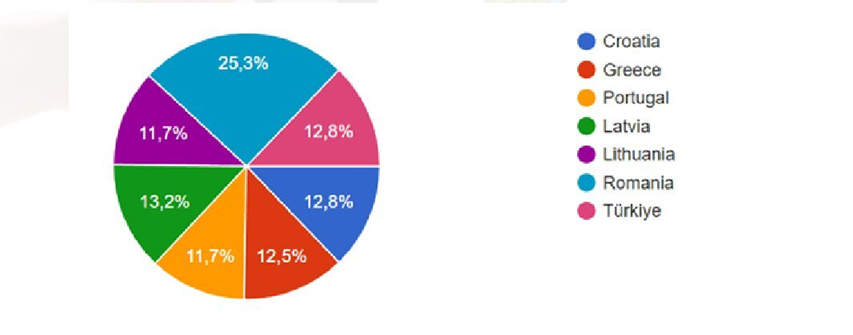
According to the first question, 273 participants took part in the survey: Croatia (35), Greece (34), Latvia (36), Lithuania (32), Portugal (32), Romania (69), and Türkiye (35).
Figure 1. Distribution of survey participants by country.
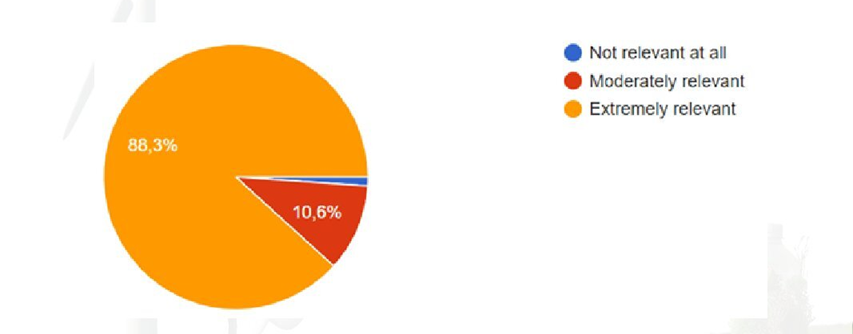
Respondents concur that the subjects addressed in the Sustainability Problem-Solving Toolkit align with contemporary sustainability concerns; 241 find them highly relevant, 29 find them moderately relevant, and 3 participants fail to see their relevance.
Figure 2. Perceived relevance of Toolkit subjects.
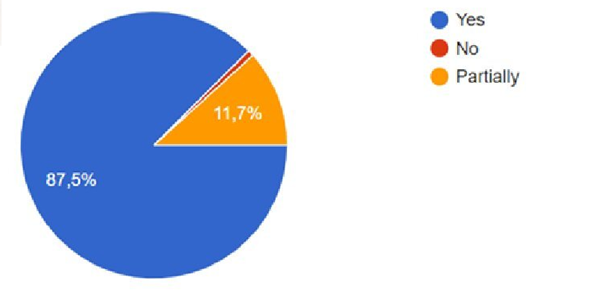
Regarding the variety of sustainability topics and their relevance to students, 239 respondents perceive the topics as diverse, 32 find them somewhat diverse and engaging, while only 2 participants perceive them as lacking diversity or student appeal.
Figure 3. Perceptions of topic diversity and student appeal.
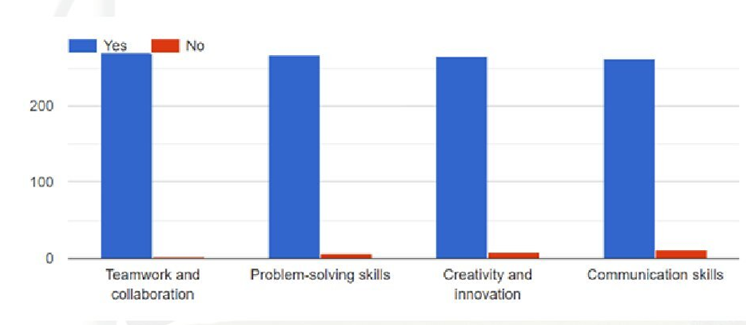
When asked about the Toolkit's effect on students' skill development, most respondents acknowledge that it fosters collaboration (271/2), enhances problem-solving abilities (267/7), communication skills (265/8), and creativity (262/11).
Figure 4. Impact of the Toolkit on teamwork, problem-solving, creativity and communication skills.
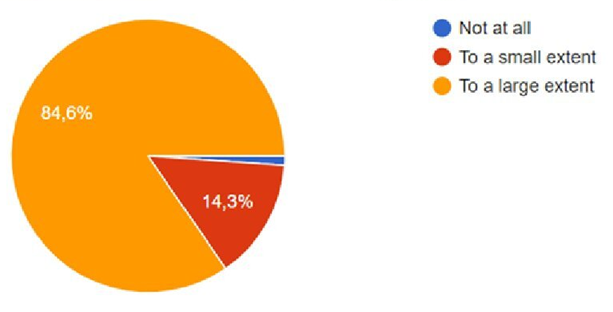
As for digital skills, the majority of respondents (231) believe that the Toolkit will contribute to the enhancement of their students' digital skills, while others anticipate only slight (39) or no improvement (3) in this regard.
Figure 5. Expected contribution of the Toolkit to students’ digital skills.
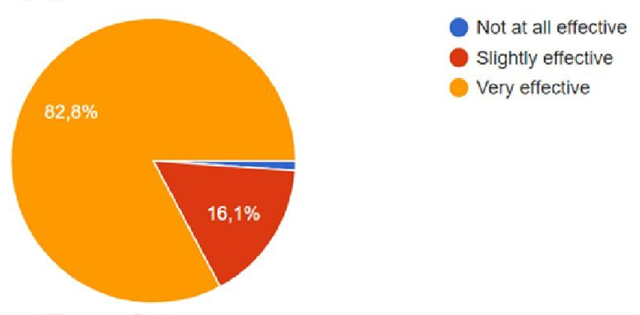
The next question was about the effectiveness of teachers’ lesson planning in addressing sustainability issues; 226 participants perceive the Toolkit as highly effective in aiding teachers with lesson planning, 44 regard it as somewhat effective, while 3 respondents do not deem it effective.
Figure 6. Perceived effectiveness of the Toolkit for lesson planning.
The vast majority of survey participants (262) express confidence in their ability to integrate the Toolkit into their curriculum to meet their students' needs, while a minority (11) are uncertain about how they can adapt the Toolkit.
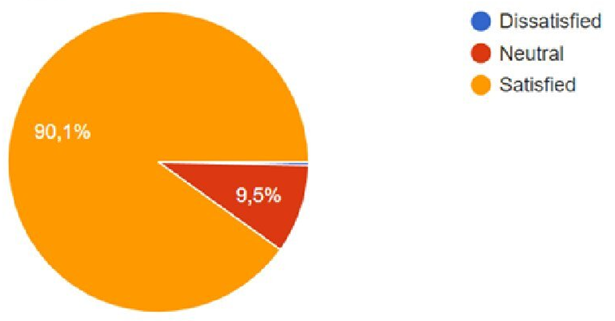
Regarding the overall experience with the Sustainability Problem-Solving Toolkit, 246 respondents express high satisfaction, 26 are neutral, and 1 respondent reports dissatisfaction.
Figure 7. Overall satisfaction with the Sustainability Problem-Solving Toolkit.
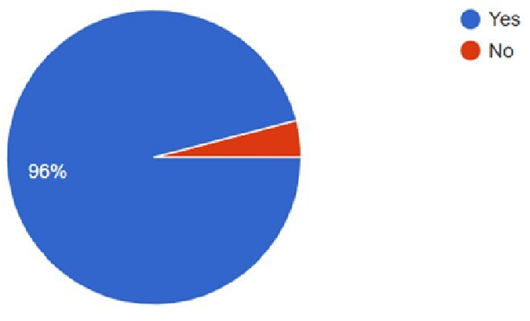
Consistent with the preceding inquiry, 267 survey participants would endorse the Toolkit to other teachers, whereas 6 would not.
Figure 8. Willingness to recommend the Toolkit to other teachers.
In the final inquiry, participants were prompted to reflect on their experience with the Sustainability Problem-Solving Toolkit or provide suggestions for enhancement. While the majority expressed satisfaction with the toolkit's materials, appreciating the ideas and options provided, and feeling motivated to implement them with their students, some raised concerns regarding the complexity of language within the learning scenarios and the ability of general education teachers to effectively utilize scenarios specialized in sustainability.
The survey report on the Sustainability Problem-Solving Toolkit reveals positive feedback from participants, affirming its relevance and effectiveness in addressing contemporary sustainability concerns.
Additionally, respondents acknowledge the toolkit's impact on student skill development, particularly in fostering collaboration, problem-solving, communication, and creativity. Concerning digital skills, most participants anticipate enhancements.
Also, the majority of teachers find the Toolkit highly effective in aiding lesson planning for sustainability issues, they express confidence in integrating it into their curriculum. Overall, respondents express high satisfaction with the toolkit and are inclined to recommend it to other teachers.
Suggestions for improvement focus on simplifying language in learning scenarios and supporting general education teachers in utilizing sustainability-focused materials effectively.
In conclusion, the Sustainability Problem-Solving Toolkit demonstrates promising effectiveness in promoting sustainability education, with potential areas for enhancement identified through participant feedback.
The survey findings underscore the positive impact and relevance of the Sustainability Problem-Solving Toolkit in addressing contemporary sustainability challenges within educational settings. The majority of respondents affirm its effectiveness in fostering student skill development and enhancing digital literacy, while also expressing high levels of satisfaction with its content and usability.
The toolkit's diverse array of topics and its ability to stimulate engagement among students are highlighted as key strengths. Moving forward, the feedback provided by participants offers valuable insights for further refining and improving the toolkit, particularly in terms of language accessibility and support for educators.
The Toolkit is going to be translated into partners’ languages and the learning scenarios contain tips for teachers. Overall, the survey indicates that the Sustainability Problem-Solving Toolkit holds great promise as a valuable resource for educators seeking to integrate sustainability and technology into their teaching practices, thereby empowering future generations to create a more sustainable world.
The Sustainability Problem-Solving Toolkit –
Survey Results
Co-funded by the European Union
Funded by the European Union. Views and opinions expressed are however those of the author(s) only and do not necessarily reflect those of the European Union or the State Education Development Agency Neither the European Union nor the granting authority can be held responsible for them
© 2024 by Sustainable Solutions